Antique Identifier, Appraisal
- 4.6
- Rating
- 100.00K
- Installs
- Free
- Price

 Analysis by App-foxy
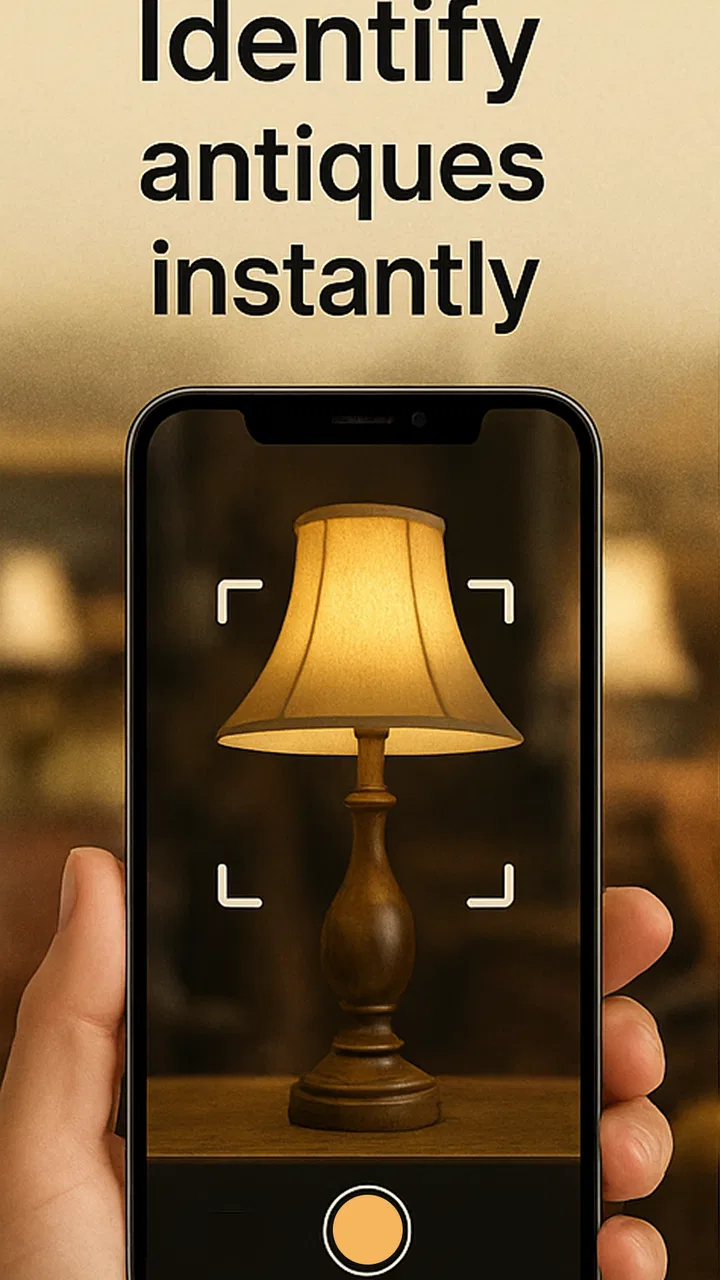
I enjoy apps that turn a moment of curiosity into something useful, and Antique Identifier, Appraisal is aimed at exactly that kind of moment. You photograph an antique, piece of jewelry, or vintage object, then use the result as a starting point for learning about what you have. In my experience, that makes it more interesting than simply searching through pictures online, especially when an object has no obvious maker’s mark or when its style is difficult to place.
At the same time, I would not treat an identification result as a formal valuation or a substitute for an experienced specialist. The most sensible way to use this Education app is as a first-pass research tool: it can help you organize questions, notice possible clues, and decide whether an item deserves deeper investigation. That distinction matters because an attractive old object and a genuinely valuable one are not always the same thing.
What the app is really useful for
The app comes from Brite Technologies LLC and is available free of charge, with optional in-app purchases priced from around five dollars to around seventy dollars per item. Its audience is broad: the content rating is Everyone, and the app runs on Android devices using version 7.0 or later. I see it fitting best into casual discovery, estate sorting, thrift-store research, and early-stage collecting rather than professional appraisal work.
You May Also Like

 Blood Strike: 2.5 Anniversary
Blood Strike’s Loadouts Turn Every Drop Into a Tactical Gamble
A close look at Blood Strike’s custom loadouts: how fast access to signature weapons reshapes its battle royale rhythm, rewards preparation, and narrows the gap between fights.

 Pandora - Music & Podcasts
Pandora’s Music Is Easy to Start, but Harder to Recover
Pandora’s strength is its low-effort path from a seed to a station. Its weak spot is how much confidence it asks you to place in connection, setup, and quiet recovery.

 8 Ball Pool
 Is Built on Rivalries, Rematches, and Routine
A close look at the rivalries, rematches, shared routines, and unanswered safety questions that turn a quick pool match into a persistent mobile community.

 Samsung Music
’s Quiet Strength Is Playing What You Already Own
Its reach comes less from spectacle than from dependable access to a personal library. That simplicity is both the app’s strongest retention engine and its ceiling.

 AccuWeather: Weather Radar
AccuWeather Review: A Quick, Clear Forecast for Everyday Decisions
For everyday plans, the best forecast is the one you can understand quickly. AccuWeather makes rain timing, radar, and local conditions easy to act on, with a few trade-offs.

 Hill Climb Racing
Why Hill Climb Racing Still Turns Crashes Into One More Run
A tiny car, a bumpy hill and one more upgrade: Hill Climb Racing keeps resurfacing because its simple chaos makes every near-miss feel personal.
More From Our News Desk



The basic appeal is immediate. Instead of beginning with a vague search such as “old silver-looking necklace,” I can use a photograph to create a more focused starting point. That is helpful when I am handling several inherited objects and do not yet know whether I am looking at costume jewelry, a period reproduction, a household collectible, or something that deserves specialist attention.
A realistic example would be clearing a relative’s cabinet before donating anything. I might photograph a ceramic figurine, a marked serving piece, and a brooch. The app could help me separate those objects into rough research groups. I would then inspect each item more carefully, record its visible markings, and compare the suggested identity with reputable references or a local dealer. The value is not that one scan settles the matter; the value is that it gives the sorting process direction.
That workflow is also where the app compares favorably with ordinary web searching. Search engines are powerful once I know the right words, but they are less convenient when I cannot describe an object accurately. Image-based identification reduces that first vocabulary problem. On the other hand, a specialist forum, auction archive, or appraiser is usually better once the question becomes specific: Is this maker’s mark genuine? Is the stone natural? Was this design produced in a particular year? Those questions need evidence beyond a visual match.
Getting a useful photograph
The quality of the photograph has a major effect on the usefulness of any visual identification tool. I would photograph the entire object first, then take closer images of the underside, clasp, back, base, signature, hallmark, label, or construction detail. A single attractive front-facing picture may show the style but hide the information that separates an original from a later copy.
Lighting is another practical consideration. I would avoid strong reflections on polished metal and glass, and I would place small items against a plain background so their edges remain clear. For jewelry, a close image of the setting and fastening can be more informative than a distant picture of the whole piece. For furniture or ceramics, the base and any wear pattern may matter more than the decorative front.
One of the less obvious advantages of this approach is that it encourages me to look at an object systematically. Rather than immediately asking, “What is this worth?”, I start asking, “What details can I document?” That shift protects against a common mistake in collecting: becoming attached to an exciting identification before checking the physical evidence.
Identification is not authentication
I would keep three separate questions in mind while using the app. First, what type of object might this be? Second, what period, material, or maker could be associated with it? Third, is the particular item authentic and in the condition claimed? The first question is suitable for an identification app. The second may require comparison and reading. The third often needs hands-on examination.
This is especially important for jewelry. A visual system may recognize a familiar design, but it cannot by itself establish metal purity, gemstone treatment, replaced components, or whether a hallmark has been altered. The same caution applies to watches, signed prints, designer accessories, and branded furniture. I would use a result to decide what to investigate next, not to make an expensive purchase or sale on the spot.
For that reason, the app is a poor choice for anyone who needs a legally defensible appraisal, insurance documentation, estate settlement, or authentication of a high-value object. In those cases, I would prefer a qualified appraiser or a specialist with access to physical inspection and market records. The app can still help prepare for that appointment by giving me a visual record and a list of questions, but it should remain the preliminary step.
Trust, controls, and careful use
The app has a strong public signal of adoption, with an average rating of about 4.6 from roughly 5.6 thousand ratings and more than 100 thousand installs. I take that as evidence that many people find the concept useful, but not as proof that every identification is accurate. Ratings describe user experience in general; they do not replace checking an individual result against physical clues.
The current release is version 3.0.0, and the app was released on September 15, 2025. When I review an app that handles photographs of personal possessions, I pay attention not only to the result but also to the choices around using it. Before uploading anything, I would read the permission prompts and privacy information shown on my device and in the store. I would also avoid photographing documents, addresses, family photographs, or anything else visible in the background that I would not want processed as part of an object image.
That is a practical trust habit rather than a claim about hidden data practices. The safest approach is to control the image yourself: use a clean surface, crop out unrelated material, and take the picture only when you are comfortable submitting it. If an item has sentimental value, I would keep my original photographs locally as well, so the app is not the only record of the object.
I also like to keep spending decisions separate from curiosity. The app is free to install and use at its basic entry point, while optional purchases range from around five dollars to around seventy dollars per item. Before selecting any paid option, I would check exactly what the purchase unlocks, whether it applies to one object or a broader use, and whether the expected depth of information matches my goal. A casual thrift-store question does not justify the same commitment as preparing a carefully documented collection.
This is one of the app’s most important trade-offs. Free access lowers the barrier to experimenting with an unfamiliar object, but the presence of paid items means I should not assume that every useful detail is included automatically. I would test the free experience with an object of low financial importance first. That lets me judge whether the style of result is actually helpful before I spend money on a more important item.
Protecting personal and sensitive objects
There are moments when a photograph can reveal more than intended. An inherited watch may be placed beside a letter. A jewelry image might include a home interior. A collection photo could show storage habits, labels, or names. I would remove those distractions before taking the picture. This is particularly worthwhile when using the app in a household where several people share a device or when the item belongs to someone else.
I would also avoid treating an app result as a reason to disclose an object publicly. If the suggested identity seems promising, I would keep the item’s location and ownership private while doing independent research. That is a sensible precaution for valuable-looking jewelry, rare collectibles, and objects connected to an estate. The app can help with recognition without requiring me to turn the discovery into a public announcement.
Another useful habit is keeping a simple evidence note for each object. I would record the photograph date, visible marks, dimensions, materials that can be observed without damaging the item, and any history supplied by the owner. Then I would place the app’s suggestion beside those observations rather than allowing it to replace them. This creates a much stronger research trail and makes it easier to spot contradictions.
Who will enjoy it, and who should skip it?
I would recommend Antique Identifier, Appraisal to curious owners, beginner collectors, families sorting inherited possessions, and anyone who often encounters unidentified vintage objects. It is especially useful when the first obstacle is not a lack of interest but a lack of vocabulary. A visual starting point can turn a confusing object into a manageable research project.
I would be more cautious about recommending it to dealers who need fast, dependable buying decisions. A dealer may use it as one small reference, but professional work normally depends on condition, provenance, market knowledge, and direct examination. I would also steer away from relying on it for precious metals, gemstones, signed art, rare watches, or disputed authenticity. The cost of a wrong assumption is too high.
People who dislike uploading photographs or who want a fully manual learning experience may prefer library references, museum databases, collecting books, or an in-person club. Those alternatives take longer, but they can teach visual vocabulary in a more deliberate way. The app is at its best when it complements those resources rather than trying to replace them.
A practical routine for better decisions
My preferred routine would be simple. I would begin with a full-object image, follow with detail shots, and write down every mark I can see before reading too much into the result. Next, I would compare the suggested category with independent references and search for examples showing the same construction, not merely a similar color or silhouette.
After that, I would inspect condition. Chips, repairs, replaced stones, missing parts, fading, and later alterations can change an object’s desirability dramatically. I would also separate sentimental value from resale value. An app may help identify a family brooch, but no estimated market interest can measure what that brooch means to the person who inherited it.
Finally, I would decide whether the object needs expert attention. If the identification remains uncertain, the markings conflict with the suggested result, or the item could be financially significant, I would stop using the app as the main authority. That stopping point is not a weakness in the workflow; it is what responsible use looks like.
My cautious verdict
Antique Identifier, Appraisal is a useful educational companion for the first stage of object research. I like the way a photograph can help me move from “I have no idea what this is” to a more focused set of possibilities. Its free entry point makes experimentation approachable, and the Everyone rating makes it suitable for ordinary household discovery. The strong user response, including an average rating of about 4.6 and more than 100 thousand installs, suggests that the format resonates with a sizeable audience.
Still, I would judge it by the quality of the questions it helps me ask, not by whether it delivers a final price. Visual recognition can be affected by lighting, angle, missing details, reproductions, and condition. Paid choices also deserve a careful look before purchase, particularly when the object is only mildly interesting or when the expected answer is uncertain.
My recommendation is to use it as a private, cautious research assistant, not as an authority. Photograph cleanly, protect unrelated personal information, preserve your own records, verify important claims independently, and bring valuable or disputed pieces to a qualified specialist. Used that way, Antique Identifier, Appraisal can make the early discovery stage faster and more enjoyable without encouraging the risky assumption that a picture alone settles an object’s identity or worth.
FAQs for Antique Identifier, Appraisal
01What is Antique Identifier, Appraisal used for?
Antique Identifier, Appraisal is designed to help users recognize and learn more about potentially valuable antiques, collectibles, furniture, artwork, jewelry, and decorative objects. You can usually upload or capture photos of an item and receive an identification, historical background, estimated period, and possible value range. It is best treated as a convenient first research step rather than a definitive professional valuation.
02How accurate are the identifications and price estimates?
The app can provide useful suggestions when photos are clear and the object is shown from several angles, but its results should not be considered guaranteed. Antique values depend on authenticity, condition, provenance, maker’s marks, rarity, restoration, and current market demand. For insurance, inheritance, legal matters, or an important sale, compare the result with auction records or consult a qualified antiques appraiser.
03What information should I provide for the best appraisal result?
Before submitting an item, photograph it in good lighting against a simple background and include close-ups of signatures, labels, stamps, serial numbers, damage, and construction details. Add any information you know about its origin, age, previous owners, and condition. Avoid blurry images, heavy reflections, and cropped photos, since missing details can lead to an incorrect identification or an unrealistic estimated value.
04Is Antique Identifier, Appraisal free to download and use?
The application may be available to download at no initial cost, but some identification tools, detailed reports, unlimited scans, or appraisal features can require a subscription or in-app purchase. Before confirming a trial or premium plan, review the pricing, billing frequency, renewal terms, and cancellation instructions shown in the app store. Availability and prices can also vary between Android and iOS.
05Does the app replace a professional antiques expert?
No. Antique Identifier, Appraisal is most useful for preliminary research, organizing items, and deciding whether an object deserves further investigation. An automated result cannot physically inspect materials, verify provenance, detect sophisticated reproductions, or fully judge condition. If you plan to sell an expensive piece, insure it, or establish legal ownership and value, obtain an independent assessment from a reputable specialist or auction house.
Pros
- Quickly identifies many antiques from photos.
- Useful for researching unfamiliar objects before buying or selling.
- Provides estimated values to support initial pricing decisions.
- Simple interface makes image-based searches easy for beginners.
- Helpful reference tool for collectors and casual users alike.
Cons
- Photo quality can strongly affect identification accuracy.
- Valuations are estimates
- not replacements for expert appraisals.
- Rare or regional items may produce limited results.
- Some features may require a subscription or in-app purchase.
- Results may lack detailed provenance or historical verification.

Antique Identifier, Appraisal
Gallery